


Most of the real estate wholesaling mentorship market is built on one asymmetry: you pay whether you close or not, and your coach gets paid either way. That’s a subscription model pretending to be education.
I’ve run StepStone Texas and the Black Sheep Convention for years, and I’ve trained hundreds of agents and investors who showed up after paying five figures for a coaching program that handed them a binder and a Zoom link. I’ve also watched people close their first wholesale deal the week after attending one of our intensives. The difference isn’t talent, market, or timing. It’s whether the training was built to produce operators or just produce students.
This guide covers what wholesale coaching actually is, when you genuinely need it, what the four formats look like in practice, what each costs, and how to tell a program worth your money from one worth walking away from.
By the end, you’ll know exactly what to ask before you sign anything.
What Wholesale Coaching Is
Wholesale coaching is paid access to someone who’s already figured out the part of the business you’re stuck on, structured so you can move faster and make fewer expensive mistakes.
That’s what it should be. What I see in the market is something wilder. “Wholesale coaching” today covers everything from a $97/month Discord server to a $50,000 one-on-one program where a guru records a 40-part video library and calls that mentorship.
The actual skill set behind wholesaling breaks into four things: marketing to find motivated sellers, having seller conversations that get to yes, writing the contract correctly, and building a cash buyer pipeline that closes on short timelines. The mechanics are not complicated. You find a distressed property, get it under contract at a significant discount, then assign that contract to a cash buyer for a fee. You never own the house. You’re paid to find the deal.
For licensed agents in Texas, that process comes with compliance questions that most generic coaching programs never address. TREC’s requirements for licensees are different from the rules for unlicensed investors, and our students at StepStone include both. Freedom Mentor’s breakdown of what’s typically left out of wholesaling education covers the gap well. If you’re licensed and want to wholesale, you need mentorship that covers the broker question and the disclosure question, not a generic investor playbook that treats your license like a liability.
Good coaching accelerates your speed through those four core disciplines. Most programs are built to sell you on the idea of wholesaling. That gap is where five-figure investments go to die.
Do You Need a Coach?
No. You don’t need a coach to wholesale real estate. People figured this out before YouTube existed.
What coaching buys is time.
A decent mentor compresses 18 to 24 months of trial-and-error into 3 to 6. Every mistake they’ve already made is one you don’t have to make yourself. If your first deal generates a $12,000 assignment fee and you get there a year faster because someone walked you through the seller conversation correctly, the math on a reasonable coaching investment works. I’ve watched that math pay out.
I’ve also watched investors spend $40,000 on a guru program and come out the other side with a beautiful workbook and zero closed assignments. I’ve seen that math fail, too, more times than I’d like to count. People arrive at our Black Sheep Conventions after years of circling this industry, half of them post-program, and close their first deal within a week of our training. Price and outcome are not correlated in this market. The correlation is between the quality of the operator teaching and the result the student gets.
So do you need a coach? No. Should you want one? That depends on where you are right now.
DIY makes sense if you’re disciplined, patient with a slow feedback loop, and not under income pressure. The information is genuinely out there. The Reddit wholesale community is one of the more honest places to read what investors actually experienced with programs they paid for, including what worked and what didn’t. I send people there when they’re skeptical about coaching for good reason.
Coaching makes more sense if you have capital you want to deploy quickly, if you’re entering a market you don’t know, or if you’ve been trying to self-teach for six months or more and keep hitting the same wall. In my experience, that wall is almost always the seller conversation or the buyer pipeline. Those are the two parts of this business that are nearly impossible to learn from watching videos.
The one thing coaching cannot replace is reps. You still have to call sellers. You still have to get contracts signed. A mentor who lets you watch them do deals without requiring you to do your own is charging you for a front-row seat.
The Four Coaching Formats (And Who Each Is For)
There are four real formats in this market. Each has a legitimate use case. Each has a failure mode. I’ve seen operators use each one well and use each one badly.
One-on-one mentorship. A single coach works with you directly: reviewing your actual deals, joining your seller calls, giving you feedback specific to your market and your situation. When the coach is actively wholesaling, this is the highest-value format available. It’s also the most expensive and the hardest to vet before you pay. The failure mode is paying $25,000 to someone who last wholesaled in 2022 and has been coasting on their reputation since. My standing advice to anyone considering this format: ask for documented proof of deals closed in your state in the last 12 months before you write a check. If they can’t produce it, you have your answer.
Group coaching programs. You work inside a cohort, usually 10 to 50 people, through a structured curriculum with live Q&A, deal reviews, and peer accountability. My experience is that this format works well for people who learn by watching others get corrected. The problem I see consistently is that experience levels inside a cohort are wide. Beginner questions eat time you needed for a harder problem. Better group programs segment by experience level or by deal stage. If you’re evaluating one, ask how they handle that spread.
Online courses with community access. Self-paced curriculum plus a private Facebook group or Discord for questions. The cheapest format and the most widely sold. The completion and results data on this format is rough. Most buyers don’t finish the curriculum and see limited results, and my own observation is that community activity in private groups drops off after the first 60 days. If you’re highly self-directed and just need a structured framework, this can work. If you need live feedback and real accountability, our experience training hundreds of students is that this format doesn’t deliver it.
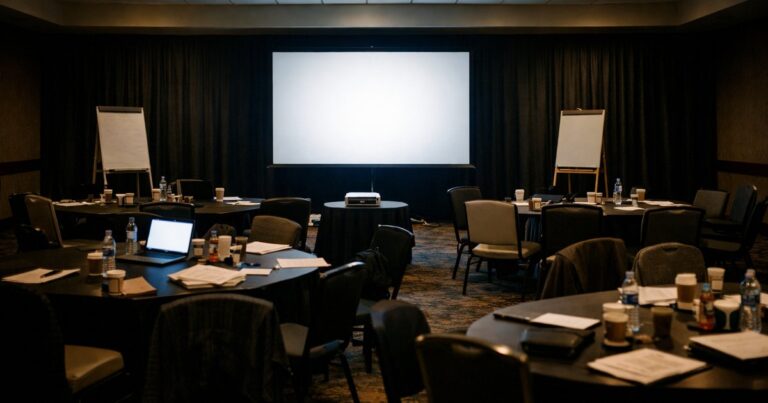
In-person intensive training. Our format at the Black Sheep Convention. Two days in a room with operators doing deals right now, working through real transactions, real contracts, real scenarios. You leave with worksheets you can run the following Monday. At our 2026 convention in San Antonio, we had 105 people work through ten classes and up to 10 hours of Texas CE, including hands-on AI training where attendees built live tools for their own businesses. I’ve run enough of these to tell you: a well-run intensive covers more real ground in two days than most online programs cover in two months.
The intensive format doesn’t replace ongoing accountability. If you need someone reviewing your contracts every week for six months, a group or one-on-one program fits better. But if you’ve been circling this industry for a year and need to get unstuck fast, being in a room with active operators changes things.
How Much Wholesale Coaching Costs
The range runs from $97 a month to $50,000 upfront. In my experience, most of what gets sold in the middle of that range is not worth what they charge.
Online courses with community: $500 to $3,000 one-time. Some of these programs are built by people who have closed real deals and put genuine work into the curriculum. Many are not. You can’t tell from the sales page. Ask for documented student results — not testimonial videos with no deal specifics, but actual assignment amounts and close timelines from students in your state.
Group coaching programs: $3,000 to $15,000. The most crowded part of this market. Price tells you almost nothing here. My view is that a $5,000 program run by someone who wholesaled 20 deals last year beats a $15,000 program run by someone whose primary income is now the coaching business. The question I’d ask any group program before buying: how many of your current students closed a deal in the last 90 days?
One-on-one mentorship: $10,000 to $50,000 or more. The high end is where the stage-show gurus operate. A legitimate one-on-one mentor who’s actively wholesaling and genuinely available to you for 3 to 6 months is worth real money. The problem is that person is rare and usually not running a full coaching business — they’re too busy doing deals. Shawn Tiberio’s review of major wholesale coaching programs is one of the more honest assessments of what the well-known programs actually deliver at various price points.
In-person intensive events: $500 to $3,000 for a two-day event. Our next Black Sheep Convention is October 15-16, 2027, in DFW. Ticket pricing and the class lineup aren’t published yet. Check blacksheepconvention.com to get notified when registration opens.
Is Real Estate Wholesaling Mentorship Worth It?
For programs built around real operators and genuine accountability: yes.
For the $25,000 to $50,000 programs sold by people whose primary income is the coaching itself: almost never. I’ll go further than that. I think those programs cause real harm. They drain capital that could have been a deal deposit or a direct mail budget. They create a false sense of preparation that makes new investors timid when they finally talk to a real seller. They delay the one thing that actually teaches you to wholesale, which is doing a deal.
My test before paying anyone for wholesale mentorship: ask them directly how many wholesale deals they personally closed in the last 12 months. If the answer is zero, vague, or pivots to “I’ve helped my students close X deals,” you’re buying content. Not mentorship.
For licensed agents, the calculation adds a layer. Most Texas brokers still act like wholesaling is off-limits for licensees. It isn’t — but it requires specific attention to your broker’s policies and TREC’s disclosure requirements. Generic investor coaching that ignores your license situation can put you in a real compliance problem. At StepStone and the Black Sheep Convention, we train both sides because our students are both agents and investors, and those audiences have different exposure when they’re assigning contracts. If you’re licensed and want to add wholesaling to your practice, our training covers the intersection that most coaches skip entirely.
Frequently Asked Questions
What is wholesale coaching in real estate?
Wholesale coaching is paid access to an experienced wholesaler who helps you move faster through the learning curve: finding motivated sellers, writing under-market contracts, assigning those contracts to buyers, and navigating your state’s legal requirements. The format varies widely — online courses, group programs, one-on-one mentorships, and in-person intensives all get marketed under the same label. The biggest variable is whether the person teaching you is doing deals right now or just teaching what they used to do.
Do I need a coach to get into wholesaling?
No. The information is publicly available, and plenty of wholesalers figured it out through self-study. What coaching buys is time — a good mentor compresses years of trial-and-error into months. Whether that compression is worth the cost depends on how much capital you can spend on tuition versus how much you’re willing to lose learning slowly.
How much does wholesale coaching cost?
Self-paced online courses with community access: $500 to $3,000. Group coaching programs: $3,000 to $15,000. One-on-one mentorship: $10,000 to $50,000 or more. In-person intensive events: $500 to $3,000 for two days. Price and quality are not correlated in this market. The most useful question is how many wholesale deals the coach personally closed in the last 12 months.
Is wholesale coaching worth it?
For programs with active operators and real accountability: yes. For high-ticket programs where the primary business is selling the coaching: almost never. The test is direct. Ask how many wholesale deals the coach personally closed in the last 12 months. A specific, verifiable number is the first sign of a program worth evaluating. Vagueness tells you everything else.
How do I choose a wholesale coaching program?
Ask three things before you commit. How many wholesale deals did you personally close in the last 12 months? Can you give me a reference from a student who closed their first deal in the last six months? Does your program address my specific situation — licensed versus unlicensed, my state’s rules, my market? A program that can’t answer the first question clearly doesn’t need to answer the other two.
What does a wholesale coaching program actually produce?
Closed deals. An assignment contract signed, a fee collected, a buyer at the table. That’s the only meaningful output. If you finish a program with excellent notes and zero closed assignments, the program failed at its one job. Before you buy, ask what percentage of their students close at least one deal within 90 days of completing the program. If they don’t track that number, you have your answer.
Where do great wholesale deals actually come from?
Direct mail, cold calling with skip-traced lists, driving for dollars, and relationships with probate attorneys, code enforcement contacts, and estate sale companies. Wholesale deals come from pipelines built before a property ever lists publicly — distressed owners, inherited properties, pre-foreclosure situations, burned-out landlords. Any coaching program that centers MLS-based deal-finding is training you to compete in the most crowded corner of the market.
When is wholesale coaching worth the price?
When you have capital to deploy and need to move fast. When you’ve been trying to self-teach for six months or more and keep running into the same wall. When you’re licensed and need guidance on compliance specific to your state. When the coach is actively doing deals and can review your actual contracts and offers — not just answer general questions about strategy.
When is wholesale coaching not worth it?
When the program’s primary income is the coaching itself, not the deals. When the mentor hasn’t wholesaled personally in the last 12 months. When the tuition eats the capital you needed for marketing and earnest money deposits. When the program makes income claims without backing them with documented, verifiable student results. When it’s generic enough to apply in any market and therefore optimized for none.
The 2027 Black Sheep Convention is October 15-16 in DFW. Two days with operators who are closing deals, not running webinars about closing deals. Ticket pricing and the class lineup aren’t out yet. Get on the list at blacksheepconvention.com.
Black Sheep Convention 2027 is October 15, 2027 in Dallas-Fort Worth.


Leave a Reply